
Window of Tolerance (Polyvagal): The Sandwich of Capacity™ Explained
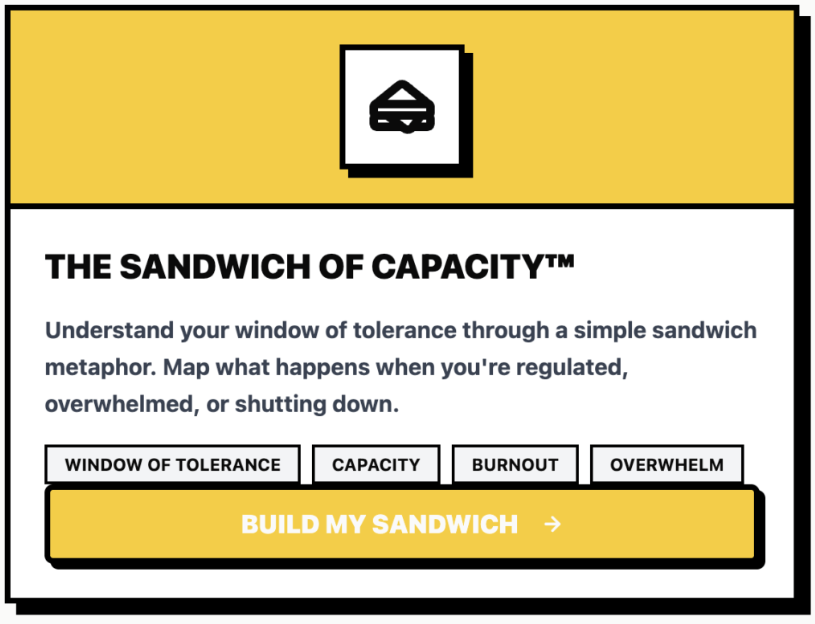
The Sandwich of Capacity™: A Window of Tolerance Tool for Understanding Your Nervous System If you’ve ever thought: “I’m fine… until I’m suddenly not.” “I can’t handle things other people seem to brush off.” “I mask all day, then crash later.” “I get overwhelmed fast, or I shut down completely.” …that doesn’t mean you’re broken. […]
The Sandwich of Capacity™ for Couples: Stop Escalation, Understand Shutdown, Build Safety
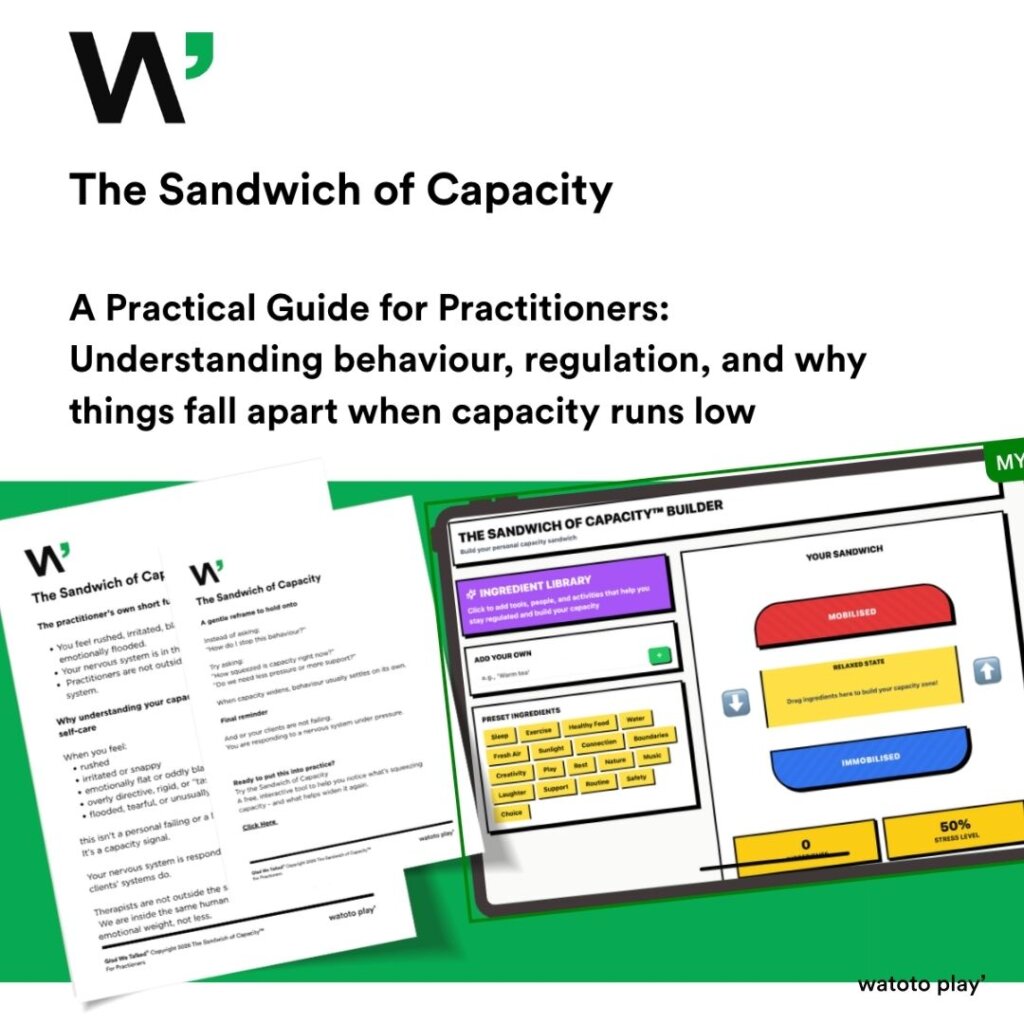
The Sandwich of Capacity™ for Couples Why We Escalate, Shut Down, and Miss Each Other (And How to Come Back) In conflict, couples often end up in the same painful loop: One person escalates (more words, more urgency, more pursuit) The other shuts down (less words, more distance, more freeze) Both feel unsafe, unseen, and […]
Emotion-Based School Avoidance (EBSA): A Capacity Lens for Supportive School Returns
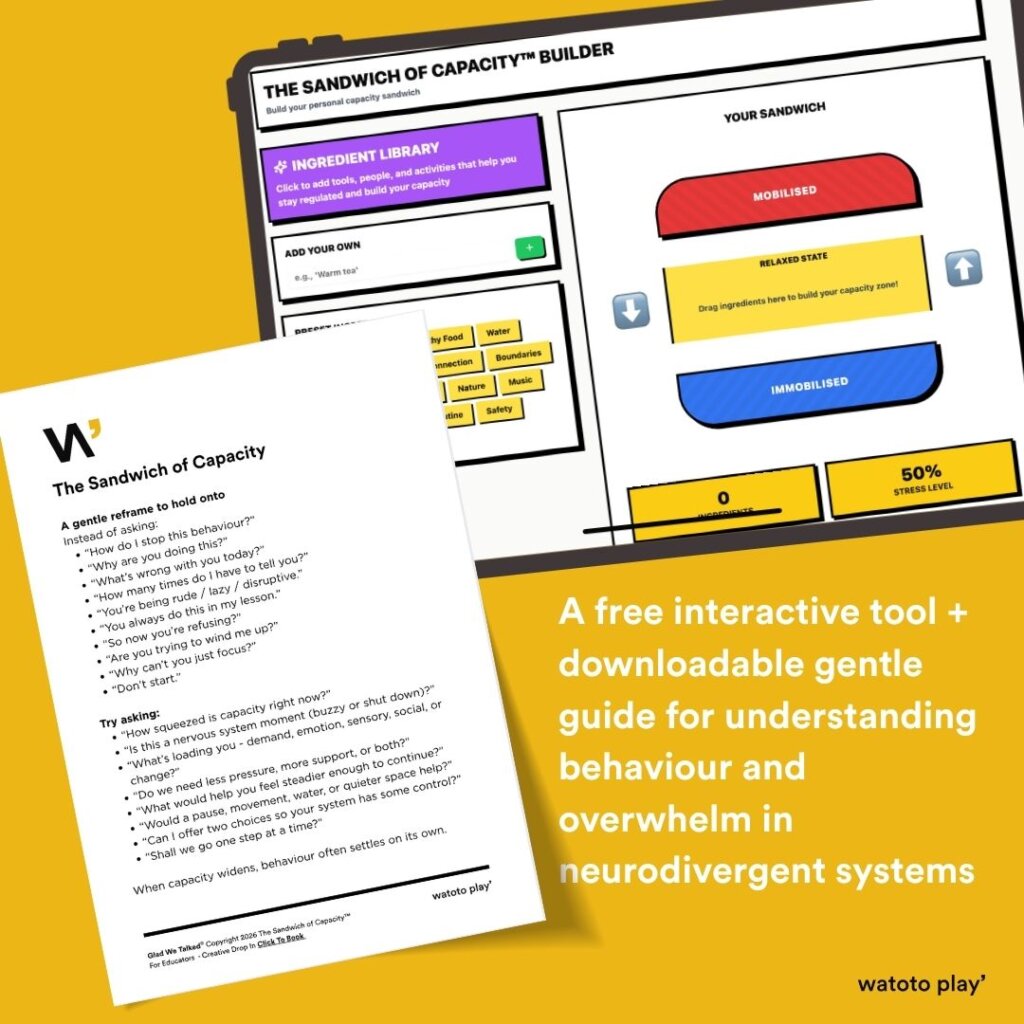
Emotion-Based School Avoidance (EBSA): Understanding School Refusal Through Capacity Emotion-Based School Avoidance (EBSA) is one of the most misunderstood experiences in childhood. From the outside it can look like: Refusal “Won’t get out of bed” Crying, panic Anger, bargaining Sudden illness complaints But EBSA often makes more sense as a capacity squeeze: the child’s […]
The Sandwich of Capacity™ for Parents: Co-regulation Without Shame (Meltdowns, Shutdowns, Burnout)
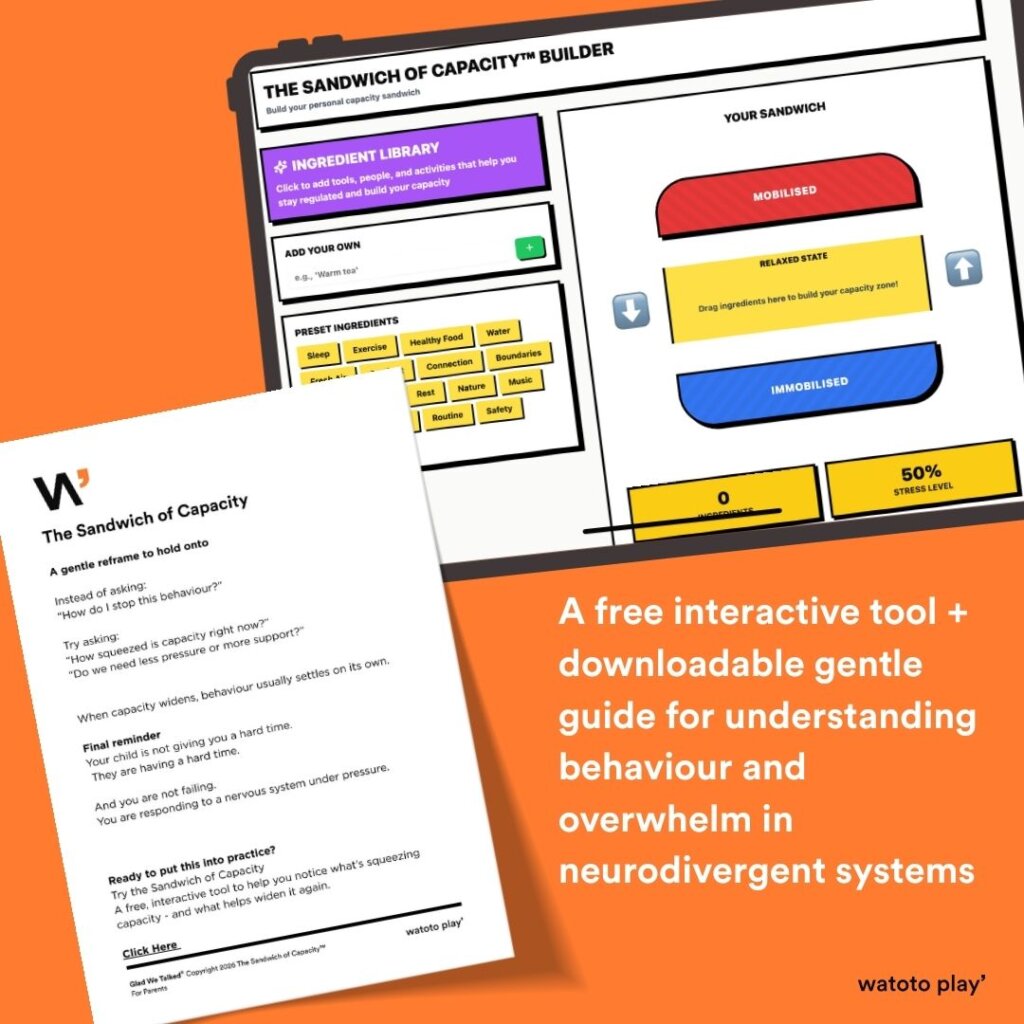
The Sandwich of Capacity™ for Parents Understanding stress, behaviour, regulation, and support during everyday family pressure A Window of Tolerance Framework for Co-regulation Without Shame Parenting often asks you to do two impossible things at once: Stay steady under pressure Help a child return to steadiness while your own sandwich is getting squeezed The […]
PSHE Lesson: Window of Tolerance (Sandwich of Capacity™) for KS2, KS3, KS4
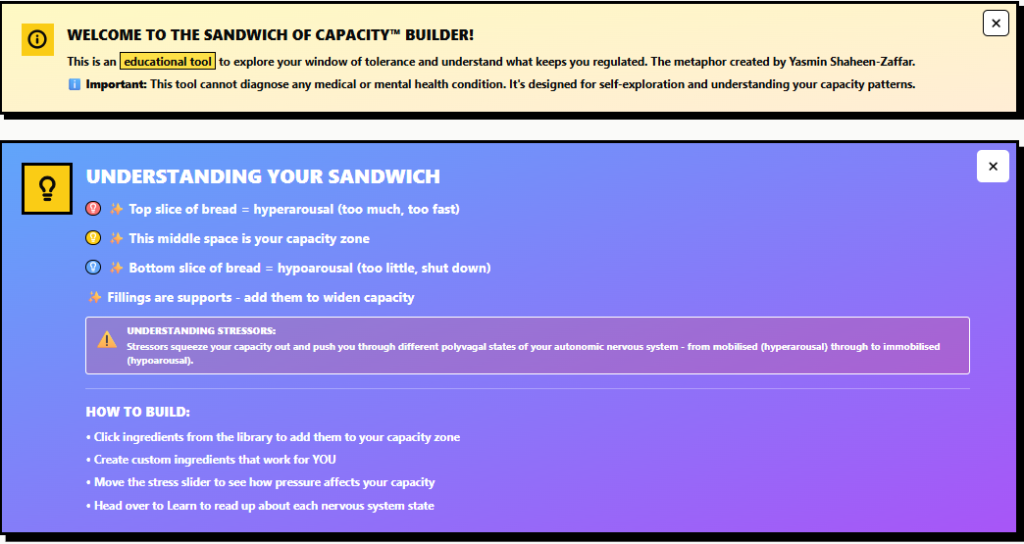
PSHE Lesson: Teaching the Window of Tolerance Using The Sandwich of Capacity™ Students are often told to “calm down” without being taught what’s happening inside their body – or what actually helps. The Sandwich of Capacity™ is an educational metaphor created by Yasmin Shaheen-Zaffar that makes the window of tolerance simple, visual, and memorable: Top […]
After-School Meltdowns: Why They Happen + A Capacity Buffer That Helps
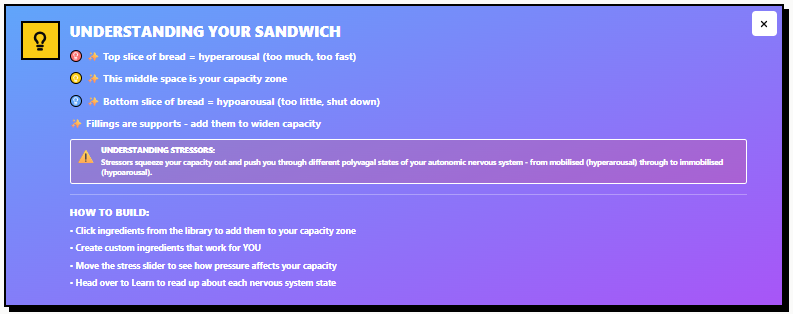
After-School Meltdowns: Why They Happen (And What Actually Helps) For overwhelmed kids, exhausted brains, and parents seeking calmer evenings After school, many children fall apart at home. Sometimes it’s a meltdown (loud, intense). Sometimes it’s shutdown (quiet, blank, withdrawn). Sometimes it’s irritability and conflict with siblings over “nothing.” This isn’t “bad attitude.” It’s often the […]
The Sandwich of Capacity™ for Adults: Window of Tolerance, Overwhelm, and Burnout Prevention
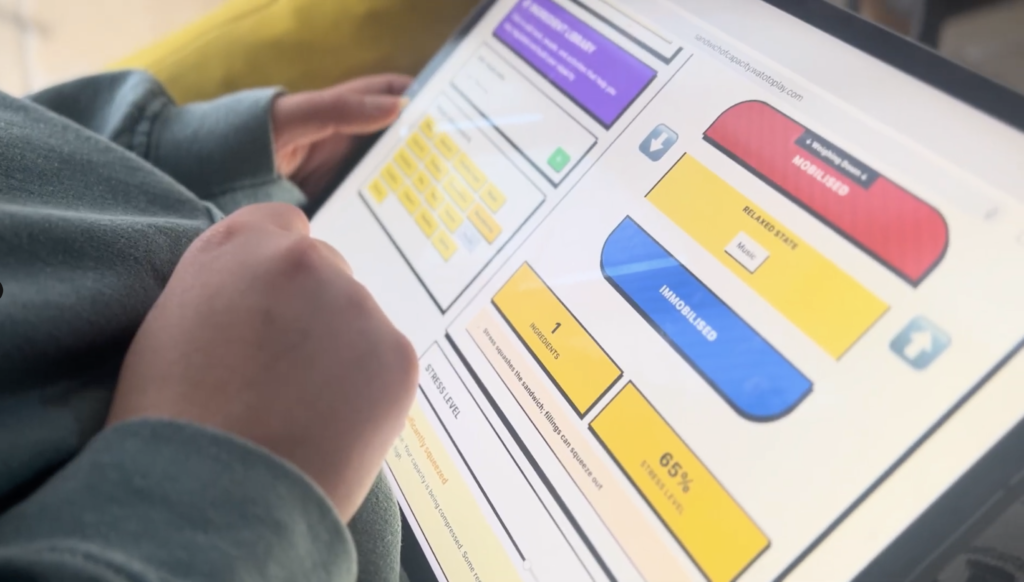
The Sandwich of Capacity™ for Adults A Window of Tolerance Framework for Overwhelm, Recovery, and Burnout Prevention If you’re an adult who looks “high functioning” on the outside but feels like you’re one small demand away from tipping over… you’re not alone. Many adults live with a hidden pattern: Holding it together all day Pushing […]
Why Does My Partner Shut Down in Conflict? (And How to Stop the Spiral)
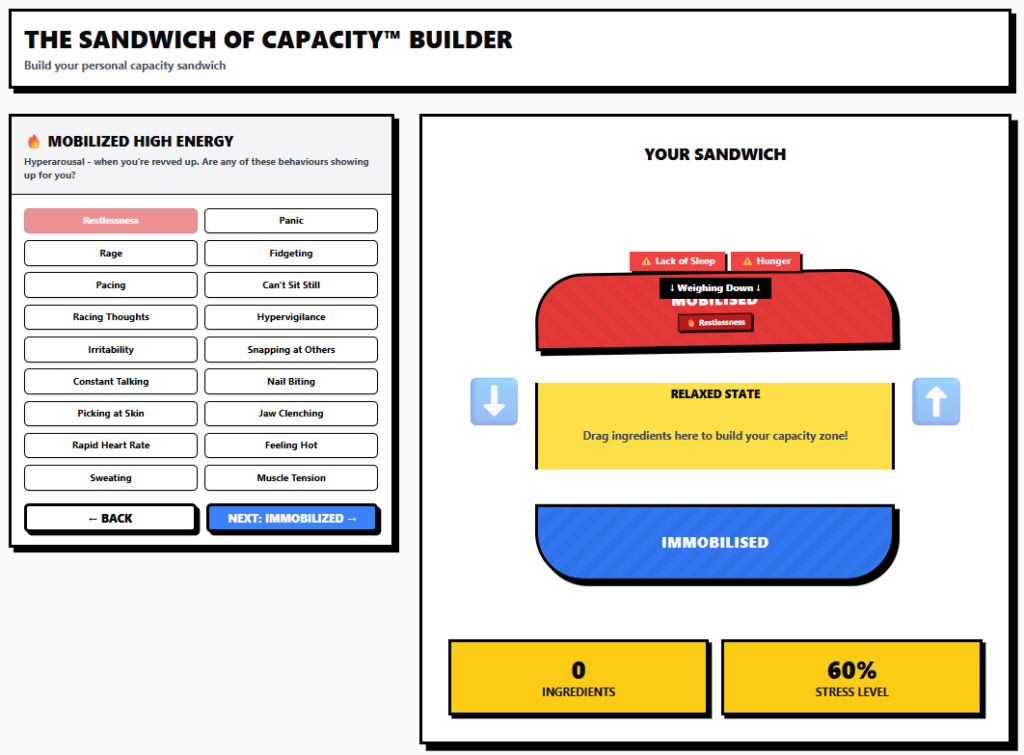
Why Does My Partner Shut Down in Conflict? (And How to Stop the Spiral) If your partner shuts down during arguments, it can feel like: They don’t care They’re avoiding you You’re talking to a wall You’re alone in the relationship If you’re the one who shuts down, it can feel like: Your mind […]
Repair After an Argument: A Step-by-Step Script to Reconnect (Sandwich of Capacity™)
Repair After an Argument: How to Reconnect Without Repeating the Same Fight Most couples don’t need more conflict “content.” They need a repair process that works when their nervous systems have been squeezed. Because when you’re outside your window of tolerance: Empathy drops Words get sharper (or disappear) Everything feels personal Your body tries to […]
How to Reconnect After Overwhelm: Scripts for Couples, Parents, and Therapists
After the Crash: Repair Without Pressure A capacity-first reconnection plan (for couples, families, and practitioners) Repair is not a performance. It’s a pathway back to safety. When overwhelm hits and misunderstandings or arguments happen – people often go into: mobilised (sharp, fast, high alert) immobilised (quiet, blank, withdrawn) Either way, the relationship can feel bruised […]