
What to Say After an Argument: Repair Scripts
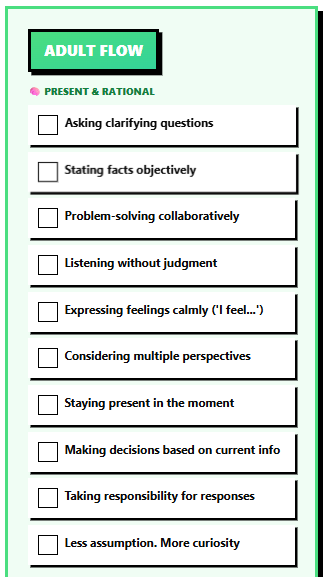
What Do I Say After an Argument ? 7 Repair Lines Using Adult Flow Repair is not admitting you’re “the bad one.”Repair is choosing reconnection over winning. After an argument, many people freeze. The surge has passed, but the words feel risky. Say too little and you seem distant. Say the wrong thing and the […]
Sandwich of Capacity™ FAQs: Window of Tolerance, Polyvagal States + Neurodivergent Regulation
The Sandwich of Capacity™ FAQs Curious about what’s happening in your nervous system – or your child’s? These FAQs answer popular questions about hyperarousal, hypoarousal, sensory overload, shutdowns, meltdowns, masking fatigue, and co-regulation through the lens of The Sandwich of Capacity™. Remember: there’s no one “right” response. The goal is curiosity, not conclusions. Curiosity over […]
Repeating Communication Patterns: Break Parent–Child Loops
Why Do We Keep Repeating the Same Communication Patterns? Because under stress, we return to what’s familiar – even when it doesn’t work. Learn More Try The Tool Common loops Critical Parent ↔ Adapted Child: blame ↔ shutdown/defend Rescuing Parent ↔ Helpless Child: overfunction ↔ dependence Controlling Parent ↔ Rebellious Child: pushback ↔ tighter control […]
People-Pleasing (Adapted Child): Boundaries Without Guilt
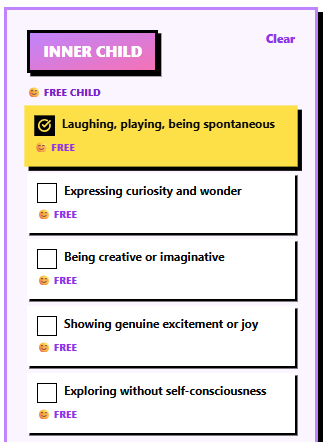
Why Do I People-Please, and How Do I Set Boundaries Without Guilt? People-pleasing is often an Adapted Child strategy: stay safe through approval. Boundaries aren’t punishment. Boundaries are information. Learn More Try The Tool PAC map Adapted Child: “If I say no, I’ll be rejected.” Critical Parent: “You should be more helpful.” Adult Flow: “My […]
Adult Ego State (TA): What Adult Flow Really Means
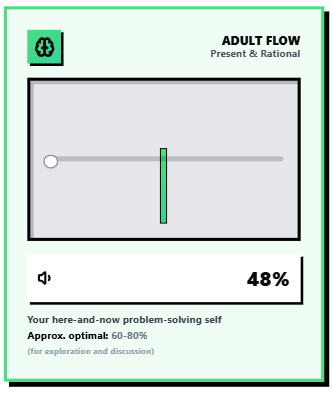
What Does “Adult” Mean in Transactional Analysis (And Why It’s Not “Being Unemotional”)? In TA, personality is described using three ego states: Parent (Critical or Nurturing) Child (Free or Adapted) Adult The confusion starts because “Adult” sounds like a moral upgrade-the good one. It’s not. It’s a functional state, not a value judgment. Adult Ego […]
How to Stop Being Defensive: A PAC Reset
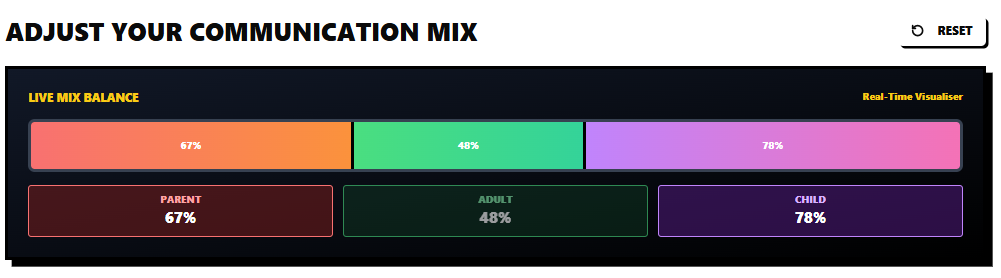
How Do I Stop Being Defensive? A PAC Reset You Can Use Mid-Conversation Defensiveness usually means: something inside you feels blamed, unsafe, misunderstood, or cornered. The goal isn’t to shame defensiveness away. The goal is to change your next move. Learn More Try The Tool What defensiveness looks like in PAC terms Adapted Child defensiveness […]
Shutdown in Conflict: Why It Happens and What to Say
Why Do I Shut Down During Conflict (And How Do I Stay Present Without Forcing It)? Shutdown can be your system trying to reduce danger signals: less output, less intensity, less vulnerability. You don’t need to “push through.” You need a plan that keeps you safe and connected. Learn More Try The Tool PAC lens […]
Therapist Guide: Using The Sandwich of Capacity™ (Window of Tolerance) With Clients
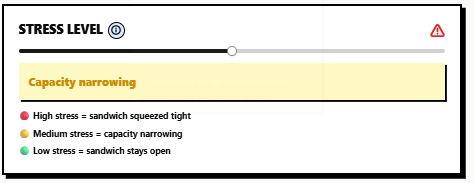
Therapist Guide: How to Use The Sandwich of Capacity™ (Window of Tolerance) With Clients Many clients arrive with the same painful belief: “I know what I should do, but I can’t do it when I’m overwhelmed.” That’s not a character flaw. It’s a capacity issue. The Sandwich of Capacity™ is a metaphor and educational tool […]
Autistic Shutdown vs Meltdown: Nervous System States + The Sandwich of Capacity™
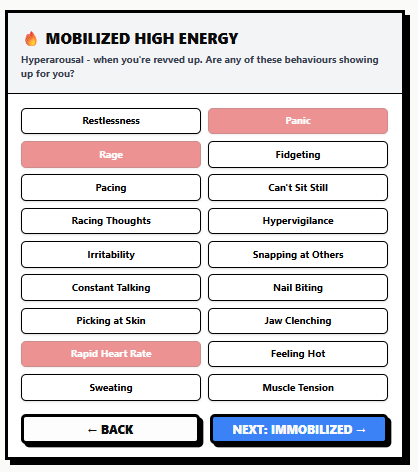
Autistic Shutdown vs Meltdown: Are They Nervous System States (And What Helps)? Autistic shutdowns and meltdowns are often misunderstood as “behaviour problems.” But for many autistic people (and many AuDHD/ADHD folk), shutdowns and meltdowns are better understood as nervous system states – what happens when capacity gets squeezed past the window of tolerance. That shift […]
Parent–Adult–Child (Transactional Analysis): The Communication Mixer Guide
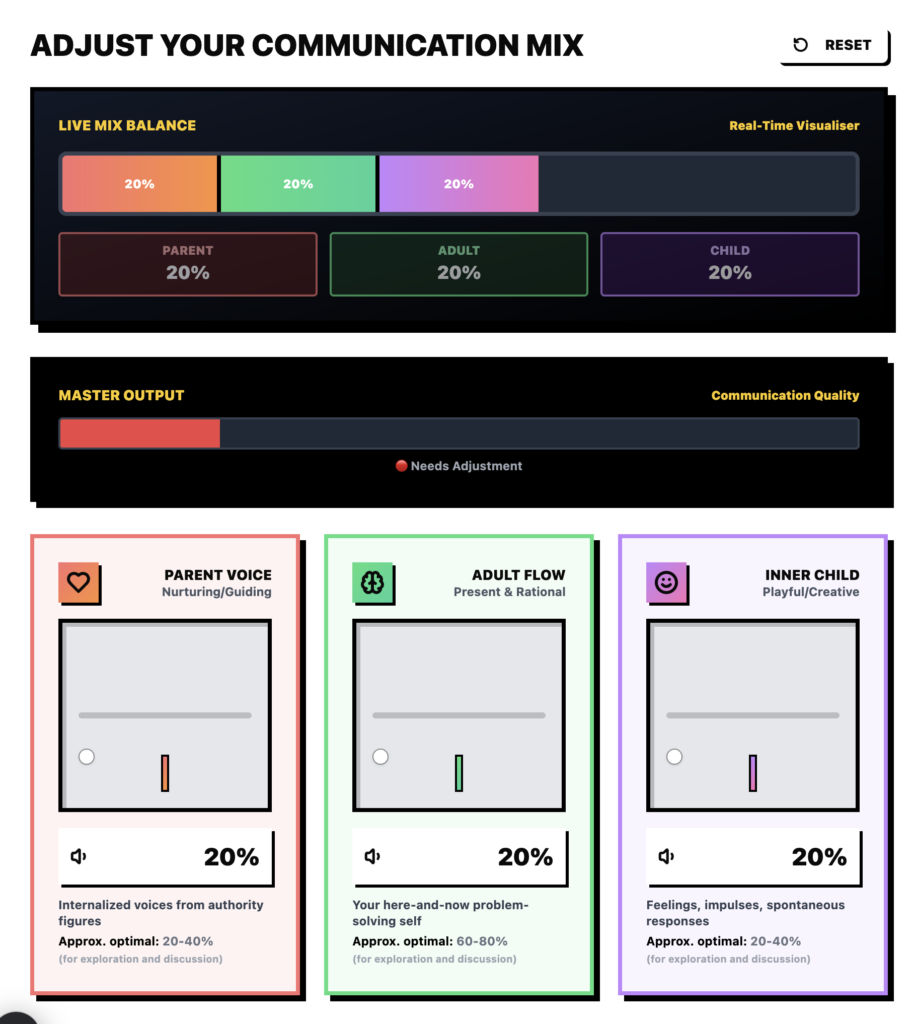
Learn the Parent–Adult–Child (PAC) ego states from Transactional Analysis and how to “DJ” your inner dialogue to reduce defensiveness, shutdown, people-pleasing, and conflict – using The Communication Mixer.