Supporting emotional wellbeing, connection, and communication across Otley and surrounding areas
learn more
What is the Glad We Talked® Otley Social and Emotional Learning (SEL) Initiative?
At its heart, Glad We Talked® exists to make emotional health, connection, and communication more accessible in everyday life – at home, in schools, and across our communities.
This Otley and Harrogate pilot is preventative, inclusive, and non-clinical, and supports people of all neurotypes. It recognises that communication doesn’t always have to be words – it can be expressed through play, movement, AAC, art, behaviour, silence, sensory needs, and shared experience.
We’re starting locally in Otley and Harrogate and surrounding areas as part of a wider vision to grow an Emotionally Healthy Yorkshire – and, in time, to help shape emotionally safer communities nationwide through partnership, learning, and shared practice.
Glad We Talked® is a Social and Emotional Learning (SEL) programme – especially for neurodivergent nervous systems.
What is Social and Emotional Learning (SEL)?
Glad we talked Otley emphasises the importance of community support.
Social and Emotional Learning (SEL) supports people to:
understand emotions and body signals
communicate and connect with others
manage stress and overwhelm
build healthy relationships
repair after conflict and return to connection
In Glad We Talked®, SEL is approached in a neurodiversity-affirming, nervous-system-informed way. It is not about performance or “looking regulated” – it’s about feeling steady enough to connect, and learning what helps when things feel hard.
Is Glad We Talked® - families and parents right for me?
If you’re in Otley, you’ll be glad we talked Otley about these crucial topics.
This programme is for parents, blended families and carers in neurodivergent families = whether you’re neurodivergent yourself, you have a neurodivergent child (or adult child)/ blended family, or you’re finding communication at home hard right now.
It may be especially supportive if:
you’re feeling stuck in cycles of conflict, shutdown, overwhelm, or misunderstanding
you’re waiting for CAMHS and want practical support you can use in the meantime
you’re looking for a steadier way to understand behaviour, emotions, and needs – without shame
you want tools that support communication beyond words (including silence, behaviour, sensory needs, and nervous system signals)
- You are exploring neurodivergence – and wondering “What now?“
If CAMHS isn’t part of your journey, that’s completely okay too – you’re welcome here.
This is a non-clinical, preventative programme designed to support real family life.
Practical details ...
Self-paced, online programme
Five modules over five months – one module a month
Seven 10–15 minute audio lessons (easy to fit into real life) in each module
Minimal video – to encourage movement and lived practice
Take part on your own or with your family
Each module includes reflections and short quizzes
Around 2.5 hours per module (online learning)
Monthly 60-minute in-person meet-up or online (evening, encouraged)
As a pilot, we’ll ask for feedback and short questionnaires after each module
Time commitment
Plan for around 2.5 hours of online learning per month, plus a 90-minute monthly meet-up in the centre of Otley.
Glad We Talked® Otley is designed to fit into your busy schedule.
What you’ll walk away with
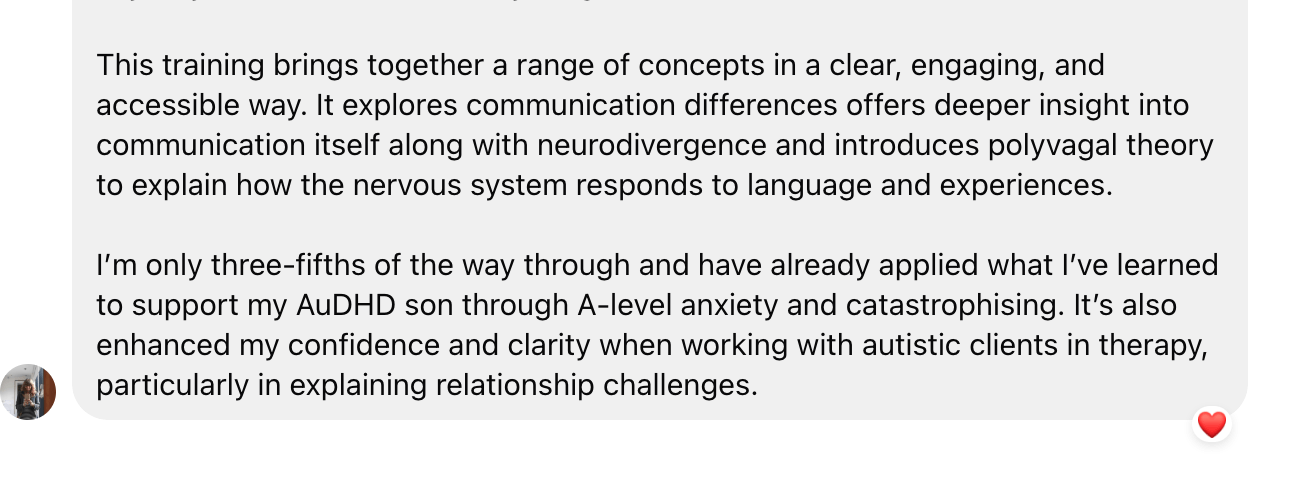
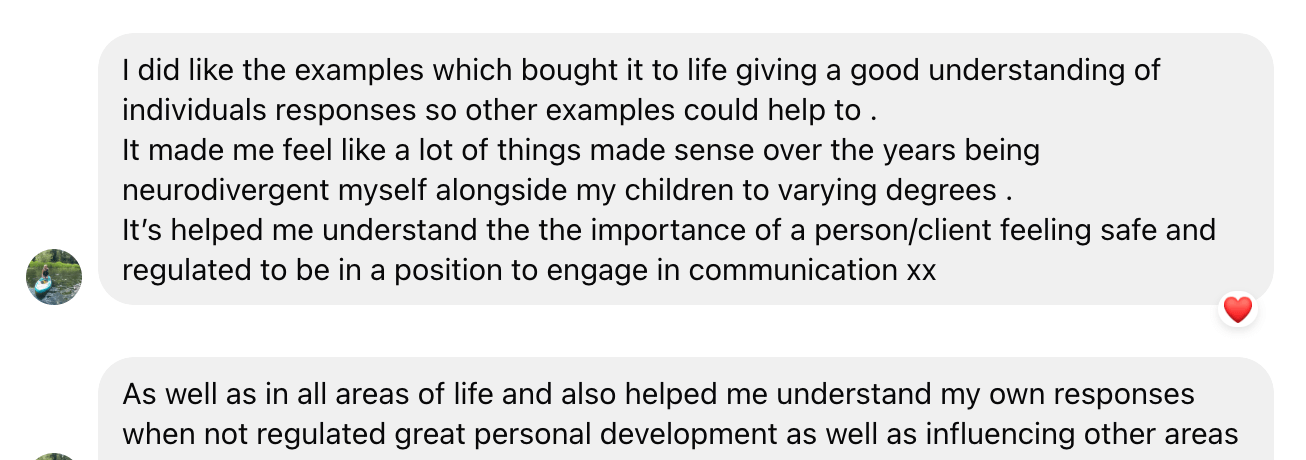
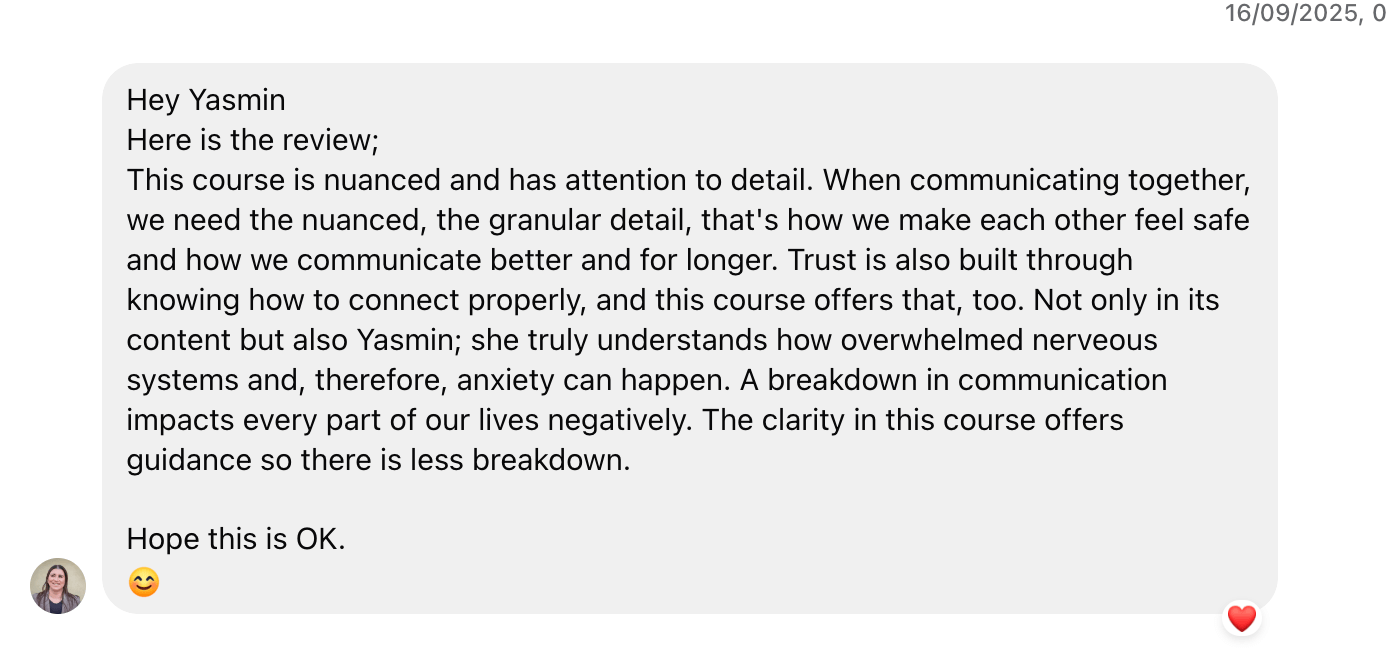
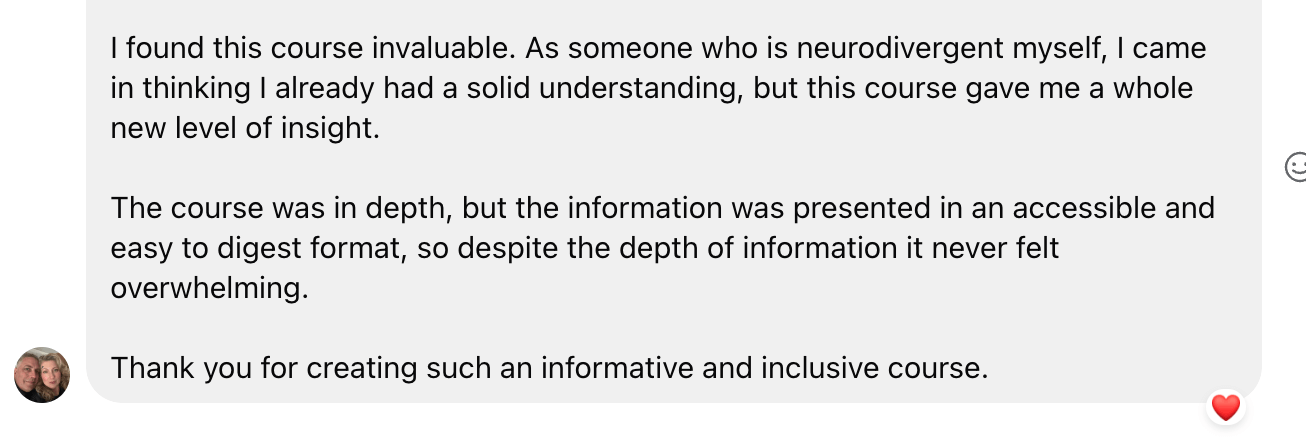
Participants often remark how glad we talked Otley has impacted their lives.
- Understanding why communication breaks down (often nervous system pressure, not bad intentions)
Seeing behaviour as communication – a clue, not a problem
Simple tools for overwhelm, shutdown, and big feelings
Support for communication beyond words (silence, movement, sensory needs, environment)
Practical, in-the-moment shifts when you’re tired or activated
Gentle repair tools for coming back together after hard moments
More confidence advocating for your family’s needs at home and at school
Why does communication matter?
Communication is how we connect, understand one another, and feel safe in relationships. It’s not just about talking – it’s about being heard, seen, and responded to.
When communication breaks down, people can feel misunderstood, overwhelmed, or alone. Over time, this can show up as conflict, withdrawal, shutdown, or big emotions that feel hard to manage.
Supportive communication helps to:
build trust and emotional safety
reduce repeated misunderstandings
respond to behaviour with curiosity rather than blame
express needs and boundaries more clearly
support children and adults when words are hard to find
When we improve communication, we don’t just change conversations – we change relationships. We build steadier authentic connections.
Glad We Talked® Otley emphasises the role of clear communication.
Why is understanding nervous system communication important?
Understanding the principles of glad we talked Otley is essential for success.
Our nervous systems are constantly communicating – often before we have words. Understanding the science – and the brain-body connection helps us respond with more compassion, clarity, and care.
Recognising the need for glad we talked Otley is the first step.
- In relationships: It helps us recognise overwhelm, shutdown, or defensiveness - and respond with curiosity instead of assumptions and conflict.
- In parenting and caregiving: Behaviour often reflects a nervous system state, not bad intentions. This supports steadier responses and fewer power struggles.
- In communication and self-advocacy: Noticing body signals helps us express needs, set boundaries, and ask for support - especially when words are hard to find.
- In mental and emotional health: Early awareness of stress and overwhelm can prevent escalation, reduce shame, and support steadier wellbeing.
- In our relationship with our bodies: Listening to signals like fatigue, tension, or sensory overload helps us care for ourselves more effectively.
About Watoto Play
At Watoto Play, we are glad we talked Otley to support emotional health.
Watoto Play is a social impact company supporting emotional health, nervous system understanding, and inclusive communication – particularly within neurodivergent families and communities.
Watoto Play creates accessible, preventative psychoeducational programmes and resources designed to reduce shame, fear, and disconnection, and helps families build steadier, more compassionate relationships.
FAQ'S
Join us as we explore why glad we talked Otley is so significant.
No. Glad We Talked® is not therapy and it does not replace clinical support. It is a preventative, non-clinical social emotional learning programme offering practical tools for everyday life.
Yes. Glad We Talked® is a Social and Emotional Learning (SEL) programme – sharing psychoeducation.
It supports emotional understanding, communication, and relationships using a nervous-system-informed, neurodiversity-affirming approach. It does not involve diagnosis or treatment.
No. You don’t need a diagnosis for yourself or your child. The programme can support families who are diagnosed, exploring neurodivergence, or simply finding things hard.
Yes. Many families use this as support while waiting for CAMHS, or alongside other services. It doesn’t replace clinical care, but it can offer steadier day-to-day support.
This programme is for adults. The programme supports families across ages – including parents of young children, teenagers, and adult children.
You’re in the right place. The programme understands behaviour, shutdown, overwhelm, silence, and big reactions as communication – not failure.
Communication can include behaviour, tone, movement, play, silence, sensory needs, and body signals – not just spoken language.
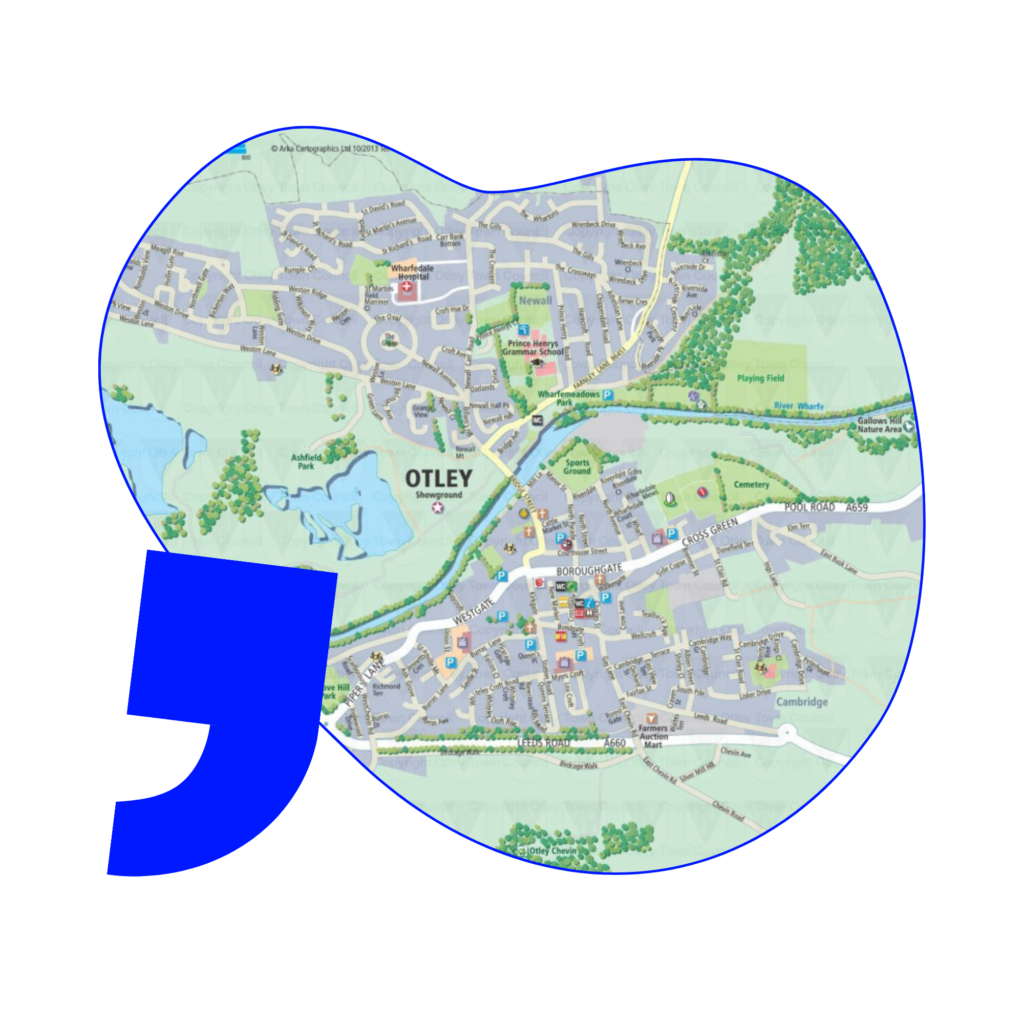
The programme is open to Otley and surrounding areas, and group sizes will be limited. Places are offered on a first-come basis, with priority for local families. If places are full, you’re welcome to register interest.
Yes – schools, organisations, and community groups can register their interest.
This pilot programme is currently open to individuals and families. If you’d like to bring Glad We Talked® to a school, class, or community setting, you can register your interest and we’ll follow up about current options and potential partnerships.
The programme is free because it’s part of a larger initiative, starting here in Otley and Harrogate.
We request feedback after sessions or modules to help us improve the programme and understand what genuinely supports families in real life. This helps refine the model and may inform future evaluation and research.
You’ll never be asked to share anything you’re uncomfortable with, and feedback is always your choice.
The AI-supported tools in Glad We Talked® sit inside a separate app. When you join, you can anonymise your identity (for example, by using a nickname and avoiding identifying details), so your reflections can stay private and personal without being tied to your real-world identity.
We also recommend avoiding sharing highly identifying or sensitive personal details in any AI tool – keep it steady, simple, and supportive.”
Hello there ....
I Am Yasmin Shaheen-Zaffar
(she/her) – a neurodivergent BACP-accredited Trauma & Relationship Counsellor specialising in neurodivergence, multi-faith dynamics, and mixed-heritage relationships.
I’m the founder of Watoto Play, where I create therapy resources for the neurodivergent community, and my work also spans training, consulting, spoken verse, podcasting, and public speaking. At heart, I describe myself as a creative and social entrepreneur – building tools, connections and conversations that support families, communities and organisations feel safer, steadier, and more understood.
Why Our Programs
Our programs are designed with glad we talked Otley in mind.
Support Neurodivergent Systems
Glad We Talked® Otley can help reduce feelings of isolation and dysregulation
Nervous-system first, not behaviour-first
My programmes focus on regulation, capacity, and safety rather than compliance or “fixing” behaviour - recognising that neurodivergent responses are often adaptive, not problematic.
Language that reduces shame increases clarity
Everything is designed to move away from “calm down,” control, or deficit-based models, offering affirming language that helps neurodivergent folk understand why they respond the way they do.
Paced to reduce overwhelm and burnout
With short lessons, gentle drip timing, and long access windows, the structure supports neurodivergent energy, attention, and capacity = allowing learning to happen without pressure.
Some Feedback
What people are saying