
Inner Critic (Critical Parent): How to Soften that voice
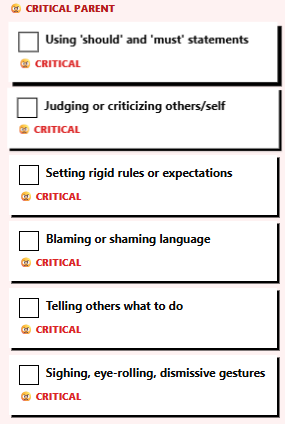
How Do I Quiet My Inner Critic? (Critical Parent vs Nurturing Parent) A harsh inner critic often believes it’s helping – preventing rejection, failure, or shame. But shame rarely creates steadiness. It usually creates collapse or rebellion – beleive me I’m sharing this from a lived and professional perspective. It tightens the nervous system instead […]
How to Give Feedback Without Being Critical
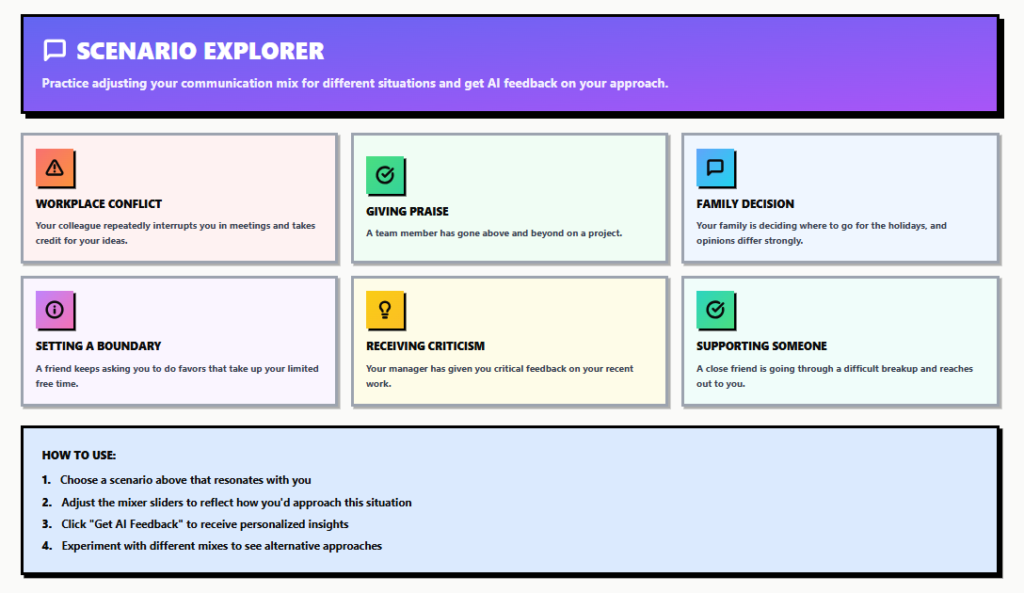
How Do I Give Feedback Without Sounding Critical or Controlling? Feedback often fails because it comes out as Critical Parent, even when your intention is care. Learn More Try The Tool The Adult feedback formula When X happens → impact Y → request Z Example: “When I’m interrupted in meetings, I lose my thread. Could […]
Taking Things Personally: RSD-Style Reactions in the PAC Model
Why Do I Take Things Personally (Rejection Sensitivity) and How Do I Respond More Steadily? Sometimes one comment hits like a verdict on your worth. That’s not “too sensitive.” That’s your system reading danger. How Do I Give Feedback Without Sounding Critical or Controlling? Feedback often fails because it comes out as Critical Parent, even […]
What to Say After an Argument: Repair Scripts
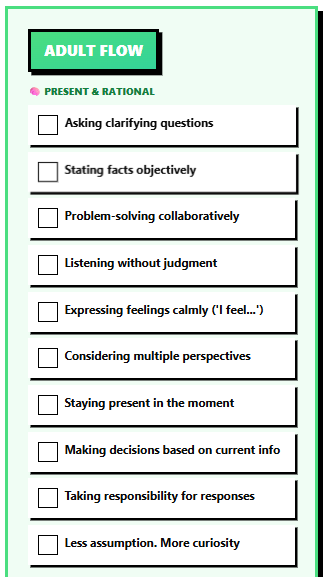
What Do I Say After an Argument ? 7 Repair Lines Using Adult Flow Repair is not admitting you’re “the bad one.”Repair is choosing reconnection over winning. After an argument, many people freeze. The surge has passed, but the words feel risky. Say too little and you seem distant. Say the wrong thing and the […]
Repeating Communication Patterns: Break Parent–Child Loops
Why Do We Keep Repeating the Same Communication Patterns? Because under stress, we return to what’s familiar – even when it doesn’t work. Learn More Try The Tool Common loops Critical Parent ↔ Adapted Child: blame ↔ shutdown/defend Rescuing Parent ↔ Helpless Child: overfunction ↔ dependence Controlling Parent ↔ Rebellious Child: pushback ↔ tighter control […]
People-Pleasing (Adapted Child): Boundaries Without Guilt
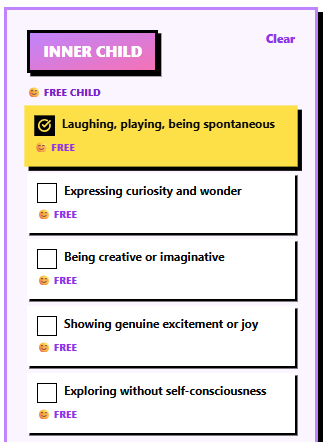
Why Do I People-Please, and How Do I Set Boundaries Without Guilt? People-pleasing is often an Adapted Child strategy: stay safe through approval. Boundaries aren’t punishment. Boundaries are information. Learn More Try The Tool PAC map Adapted Child: “If I say no, I’ll be rejected.” Critical Parent: “You should be more helpful.” Adult Flow: “My […]
Adult Ego State (TA): What Adult Flow Really Means
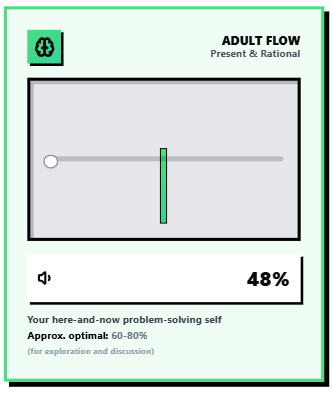
What Does “Adult” Mean in Transactional Analysis (And Why It’s Not “Being Unemotional”)? In TA, personality is described using three ego states: Parent (Critical or Nurturing) Child (Free or Adapted) Adult The confusion starts because “Adult” sounds like a moral upgrade-the good one. It’s not. It’s a functional state, not a value judgment. Adult Ego […]
How to Stop Being Defensive: A PAC Reset
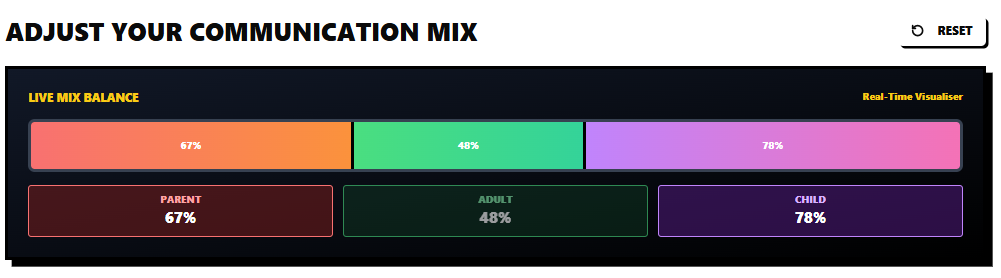
How Do I Stop Being Defensive? A PAC Reset You Can Use Mid-Conversation Defensiveness usually means: something inside you feels blamed, unsafe, misunderstood, or cornered. The goal isn’t to shame defensiveness away. The goal is to change your next move. Learn More Try The Tool What defensiveness looks like in PAC terms Adapted Child defensiveness […]
Shutdown in Conflict: Why It Happens and What to Say
Why Do I Shut Down During Conflict (And How Do I Stay Present Without Forcing It)? Shutdown can be your system trying to reduce danger signals: less output, less intensity, less vulnerability. You don’t need to “push through.” You need a plan that keeps you safe and connected. Learn More Try The Tool PAC lens […]
Parent–Adult–Child (Transactional Analysis): The Communication Mixer Guide
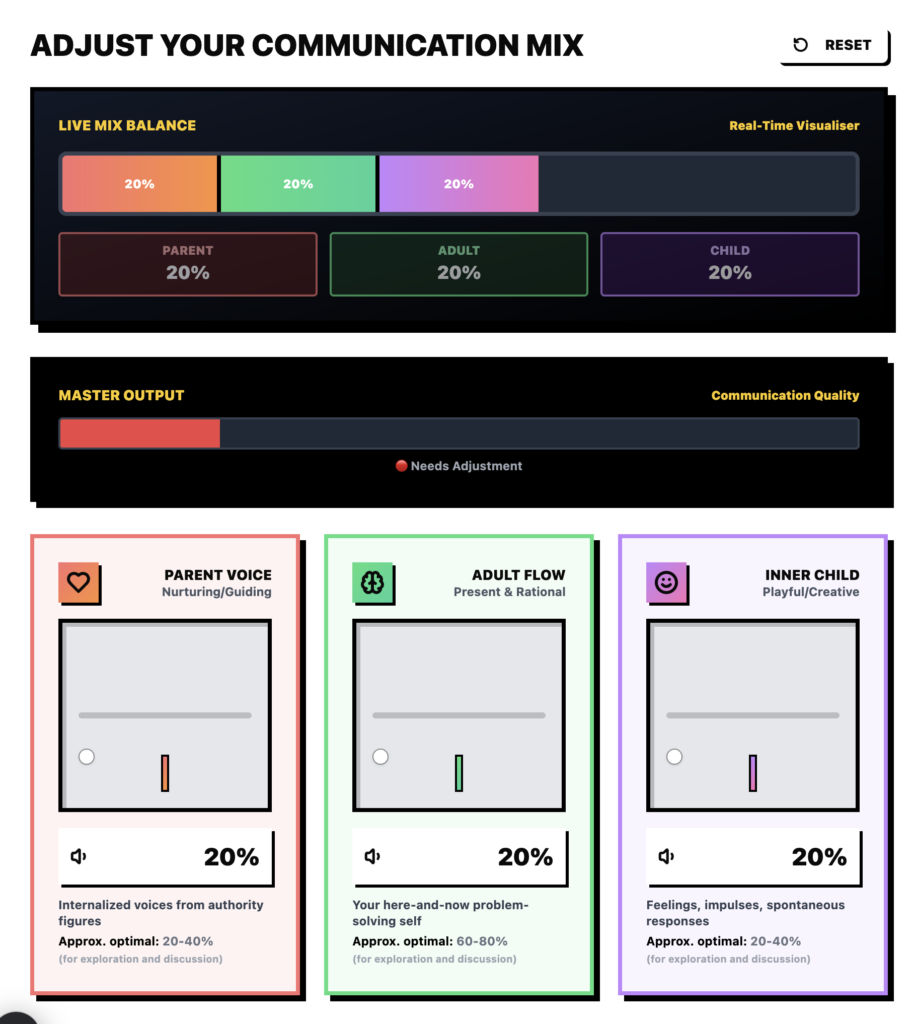
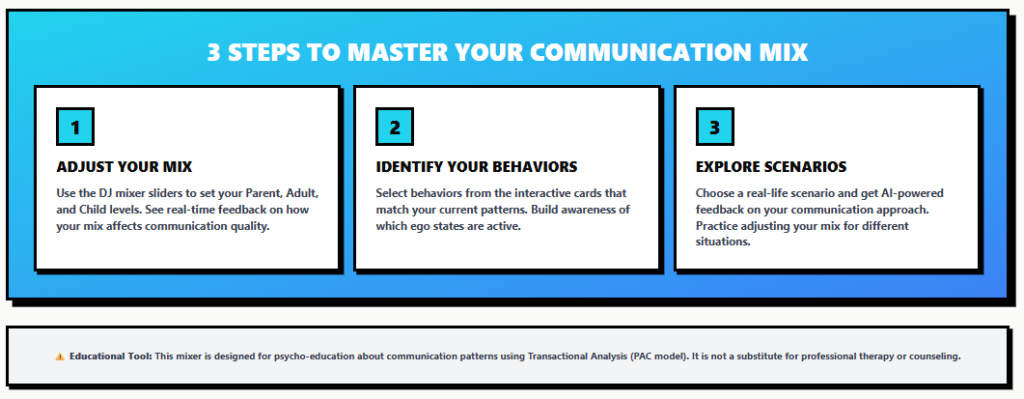
Learn the Parent–Adult–Child (PAC) ego states from Transactional Analysis and how to “DJ” your inner dialogue to reduce defensiveness, shutdown, people-pleasing, and conflict – using The Communication Mixer.